
Can Vaseline Prevent or Reduce Wrinkles?
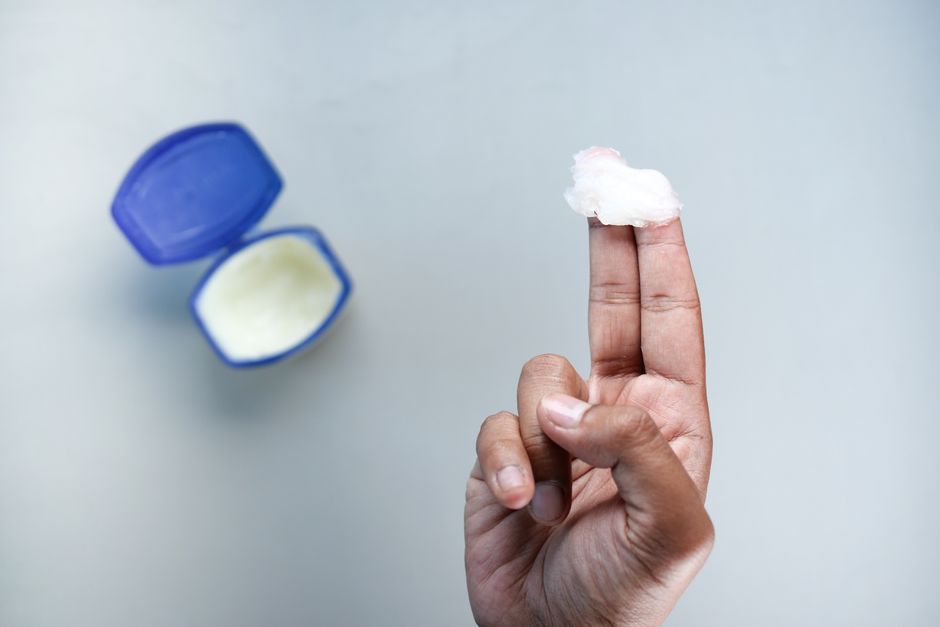
Vaseline can temporarily soften the look of fine lines caused by dry skin by sealing in moisture, but it does not erase established wrinkles or replace proven wrinkle prevention. Apply a thin layer to clean, damp skin, often over moisturizer. Skip it if it triggers breakouts, and do not use it instead of sunscreen.
Can Vaseline reduce the appearance of fine lines on my face?
Yes, it can make some fine lines look softer for a while when those lines are emphasized by dryness. Petrolatum forms a barrier that slows water loss; hydrated skin can look smoother than dry, tight skin.
The American Academy of Dermatology explains that moisturizer traps water in the skin, giving it a more youthful appearance. That effect is about hydration and appearance, not a lasting change to the skin’s structure. Vaseline can seal moisture in, but it does not add water by itself.
That distinction matters. A line that looks less visible after moisturizing has not necessarily been removed. The smoothing effect fades as the skin loses moisture or the product is washed away.
Does Vaseline prevent wrinkles or remove wrinkles that are already there?
No. Vaseline can support the skin barrier, but the provided research does not show that it prevents wrinkles or removes established lines.
A human volunteer study indexed by PubMed found that Vaseline petroleum jelly accelerated recovery of the skin barrier after it was experimentally disrupted. The study examined barrier recovery, not wrinkle prevention or reduction. A stronger barrier can help limit dryness; it is not evidence that petrolatum rebuilds collagen or reverses age-related changes.
Natural aging can bring lines and thinner, drier skin. The American Academy of Dermatology also identifies sun exposure and other environmental factors as contributors to premature aging. For sun-related prevention, the AAD recommends shade, protective clothing, and broad-spectrum, water-resistant sunscreen with SPF 30 or higher.
Sunscreen has evidence Vaseline does not. In a randomized community-based trial of 903 adults younger than 55 in Australia, the daily sunscreen group showed no detectable increase in skin aging after 4.5 years; measured aging was 24% less than in the discretionary-use group. The finding supports daily sunscreen for slowing photoaging, not petrolatum as a substitute.
Some wrinkle treatments make narrower promises, too. Mayo Clinic says tretinoin can be prescribed for fine wrinkles and sun-damaged skin, but it does not completely or permanently erase those problems or greatly improve deep wrinkles. Vaseline has no demonstrated wrinkle-removing effect in the sources provided.
How should I apply Vaseline to my face for wrinkles?
Use it as a thin, final layer on clean, damp skin if your skin tolerates it. A simple nighttime routine is enough; a thick coat does not turn a barrier product into a wrinkle treatment.
- Cleanse your face gently and leave the skin slightly damp.
- Apply your usual moisturizer while the skin is damp. The AAD recommends this because moisturizer helps trap water.
- Smooth a small amount of Vaseline over areas that feel dry. Keep the layer thin and avoid applying it to areas where it tends to trigger breakouts.
The AAD’s petroleum-jelly guidance says to apply it when skin is damp for the best results. The same page notes that facial use can cause breakouts in some acne-prone people. If you are acne-prone, oily, or prone to clogged pores, test a small area first or skip facial slugging; choose products labeled non-comedogenic when pore clogging is a concern.
Sensitive skin calls for a cautious approach. Introduce one product at a time and stop if you develop irritation or new breakouts. For eyelids that are dry, the AAD lists petroleum jelly as an option; use only a small amount on the skin and keep it out of the eyes.
Can I use Vaseline over retinol or other wrinkle treatments?
Do not seal an irritating treatment under Vaseline when your skin is already burning, peeling, or sore. The provided sources do not give a universal layering rule for every retinol product, so follow the treatment’s directions and ask a clinician if irritation persists.
Mayo Clinic notes that topical tretinoin can cause irritation, dryness, peeling, or burning. It advises using tretinoin only as directed, and says a clinician may recommend moisturizer to ease irritation. Adding a heavy occlusive layer over an active is not a substitute for that guidance.
Tretinoin can also increase sun sensitivity. Mayo Clinic advises sunscreen and sun-protective clothing outdoors. More broadly, the AAD recommends broad-spectrum SPF 30 or higher, with reapplication every two hours or after swimming or sweating. Vaseline provides no sun protection.
Frequently Asked Questions
Will Vaseline cause breakouts or milia if I use it on my face?
The American Academy of Dermatology warns that petroleum jelly on the face can cause breakouts in some acne-prone people. The provided sources do not establish whether it causes milia, so stop using it if you notice bumps or worsening acne.
Is Vaseline safe to use around my eyes?
The American Academy of Dermatology recommends petroleum jelly to relieve dry skin, including dry eyelids. Use a small amount on the skin and keep it out of your eyes; stop if irritation develops.
Do I need moisturizer under Vaseline when slugging?
A moisturizer is not a strict requirement, but it can add water to the skin before Vaseline seals moisture in. Apply moisturizer to damp skin, then use a thin layer of Vaseline as the final step.
Does Vaseline protect my skin from sun-related wrinkles?
No. Vaseline is not sunscreen. The American Academy of Dermatology recommends shade, sun-protective clothing, and broad-spectrum, water-resistant SPF 30 or higher to help prevent premature aging.
Sources
- American Academy of Dermatology: Petroleum Jelly
- American Academy of Dermatology: Reduce Premature Skin Aging
- Ghadially et al., Journal of the American Academy of Dermatology, via PubMed
- Mayo Clinic: Tretinoin Topical Route
- Hughes et al., Annals of Internal Medicine, via PubMed
- American Academy of Dermatology: Skin Care on a Budget
Read next

What Foods Help Prevent Alzheimer’s Disease?
A practical MIND-style eating guide, with research limits, weekly food targets, and simple meal swaps.

How Do I Choose a Haircut That Suits My Hair and Routine?
Choose a haircut that fits your texture, density, face shape, styling habits, and upkeep—not just a trend photo.
Why Does My Skin Feel Tight and Dry After I Shower?
Learn how warm, short showers, gentler cleansing, and prompt moisturizing can help reduce post-shower dryness and itch.
Can Eye Cream Get Rid of Under-Eye Bags?
Learn what caffeine, retinol, and moisturizers can realistically do for morning puffiness—and when under-eye bags may have a structural cause.